Empowering our planet through science and innovation
The Company operates in a broad range of studies and advisory services in the field of Environmental Sciences. It coordinates and collaborates with esteemed scientists, offering general environmental research services as well as distinctly interdisciplinary services. The studies, research, and other services aim at climate change adaptation and, more broadly, activities involving climate, meteorological, and environmental services. As part of conducting and presenting these studies to the scientific or general public, the Company provides training seminar services for not only corporate executives but also for broader educational purposes.
Among the Company’s founders are esteemed scientists with extensive experience in Environmental Sciences, Atmospheric Physics, and Climatology.
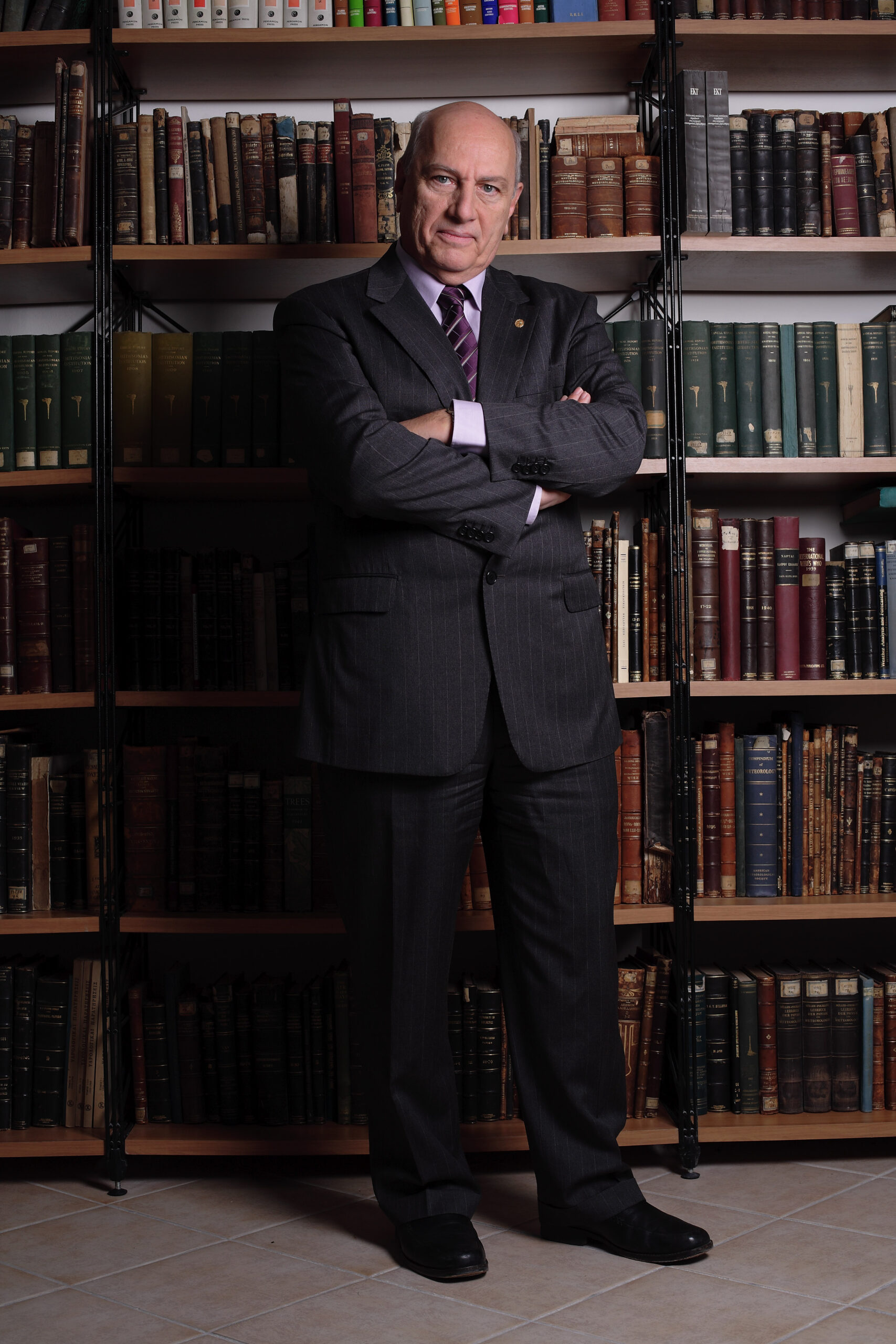
CHRISTOS S. ZEREFOS
Secretary General
Academy of Athens; Climate Envoy for Greece, 28 Panepistimiou str., 10679 Athens, Greece
zerefos@geol.uoa.gr, zerefos@academyofathens.gr, +30 210 3626717, www.christoszerefos.com
ACADEMIC POSITIONS
Head, Research Centre for Atmospheric Physics and Climatology of the Academy of Athens (2008-). Chair Holder of the UNESCO Chair on Natural Hazards in the Geosphere, the Hydrosphere and the Atmosphere at the National Observatory of Athens (2008-2019). Professor of Atmospheric Physics, National and Kapodistrian University of Athens, Faculty of Geology and Geoenvironment, Greece (2002-2010). Professor of Atmospheric Physics and Director of the Postgraduate Studies in Environmental Physics, Aristotle University of Thessaloniki, Greece (1979-2002). Head of the Centre for Environmental Effects on Health, Biomedical Research Foundation, Academy of Athens (2003- ). Scientific Collaborator, (Samarbeidspartnere), University of Oslo, Norway (1995). Honorary Fellow (Fulbright Scholar), School of Physics and Astronomy, University of Minnesota, USA (1985). Visiting Professor, Physics and Astronomy Department, Boston University, Boston, USA (1983)
AWARDS AND RECOGNITION
Ηas received a number of internationally recognized awards, among which the Honorary Doctorate Degree, Democritus University of Thrace (2023), the Order of Honour from the President of the Hellenic Republic (2020), the title of Honorary Professor of the Physics Department of the Aristotle University of Thessaloniki (2018), Badge of Honor of the Bulgarian Academy of Sciences (2018), “Honorary Member” of the International Ozone Commission (2016), the Honorary Doctorate Degree, University of Patras (2016), the Yoram Kaufman Award of the American Geophysical Union (2015), the French Government Decoration “Commandeur dans l’ordre de Palmes académiques“ (2015), the Blaise Pascal Medal, European Academy of Sciences (2015), Award and “Ioan Ursu” Medal of the Balkan Physical Union (2015, 2018), Medal of the City of Athens (2010), Professor Emeritus of the National and Kapodistrian University of Athens (2010), the “European Union Prize for Cultural Heritage / Europa Nostra Award” awarded to the National Observatory of Athens for the establishment of the Geoastrophysics Museum and the rehabilitation of the buildings, the laboratories and the astronomical Library by D. Aiginitis with more than 10.000 historical volumes under his supervision (2010), the Gold Medal of the City of Thessaloniki (2008), the Honorary Degree of Doctor of Humane Letters, University Division of the American College ANATOLIA, Thessaloniki (2008), Award Certificate and Letter from UNEP and from IPCC for his substantial contribution to the reports of IPCC, which shared the 2007 Nobel Peace Prize with the former Vice President of USA, Al Gore (2008), Fellow, Institute of Physics (2002), UNEP Honourable Mentions (2012, 1999, 1995), Editors Award for Excellence in Refereeing, American Geophysical Union (1998), Global Ozone Award, UNEP on the 10th Anniversary of the Montreal Protocol (1997). Reviewer, IPCC “Special Report on Managing the Risks of Extreme Events and Disasters to Advance Climate Change Adaptation (SREX)”, Field et al., Cambridge, UK, 582 pp. (2012). Review Editor, Chapter 5: Solar Ultraviolet Irradiance at the Ground, IPCC “Aviation & the Global Atmosphere” Report, Switzerland (1998). In the past 20 years has acted as author, contributor or reviewer in almost all WMO/UNEP Scientific Assessments of Ozone Depletion (Montreal Protocol Who’s Who https://montrealprotocolwhoswho.org/). His proposal to the Greek Government (2019) for the creation of a flexible international mechanism to protect natural and cultural heritage monuments from climate change has been included in the emblematic UN activities by the Secretary General of the UN, Antonio Guterres. This initiative has been supported by more than 100 countries, UNESCO, the World Meteorological Organization, and other NGOs such as ICOMOS and Europa Nostra.
SELECTED MEMBERSHIP TO SCIENTIFIC SOCIETIES
Member of the American Geophysical Union (19-1999) and Life Member (since 2000), Foreign Member of the Norwegian Academy of Sciences and Letters (since 1998), Secretary of the International Ozone Commission (2000-2008) and President (2008-2016), Member of the European Academy of Sciences and Arts (since 2002), Member of the Environment Strategy Group (ESG) of the European Academies Science Advisory Council (EASAC) (since 2002), Fellow of the Institute of Physics (since 2002), Member of the Hellenic National Commission for UNESCO (since 2006), Member of the Academy of Athens (since 2007), Member of the International Academy of Astronautics (since 2008), President of the Greek National Committee of the International Union of Geodesy and Geophysics (IUGG) (since 2008) and Member of the IUGG Council (since 2016), National Representative of the Greek GEO Office (since 2008), Member of the Academia Europaea (since 2008), Corresponding Member of the Russian Academy of Natural Sciences (since 2009), Member of the Georgian Academy of Natural Sciences (since 2009), Member of the European Academy of Sciences (since 2010), Member of the Board of Directors of the Centre for Hellenistic Studies, Library of Alexandria (since 2011), Member of the National Council for Climate Change Adaptation of the Ministry of Environment and Energy (since 2017), Climate Envoy for Greece (since 2019).
SCIENTIFIC ACHIEVEMENTS
Christos Zerefos became known in the 70s for his studies on the long- and short-term variability of ozone. The solar activity effects in the lower stratosphere, e.g., his paper with Paul Crutzen (JGR, 1975), was one of the first studies to model the physics of solar activity-stratosphere relations. With Harry van Loon, they first observed the El Nino signals in the lower stratosphere (Mon. Weather Rev., 1982) and in the columnar ozone (JGR, 1992). His early papers on long-term trends in stratospheric temperatures and total ozone include one of his most important papers with Stolarski et al. (Science, 1992), which boosted the scientific basis for the Montreal Protocol, leading to the phase-out of halocarbons. This work has been updated in 2014 (Zerefos et al., ACP, 2014).
His papers on the inverse relationship between ozone and UV-B, provided for the first evidence that UV-B had significant positive trends. These include “A note on the recent increase of solar UV-B over northern mid latitudes”, GRL, 1995; “Optical properties of tropospheric aerosols …, Appl. Optics, 1997 and “Spectral measurements of solar UVB radiation and its relations to total ozone, SO2, and clouds”, JGR, 1993. He also published papers on record low total ozone anomalies and the effects of volcanic eruptions, such as his paper with Bojkov “Record low total ozone during northern winters of 1992 and 1993″, GRL 1993.
In the 80s, Zerefos pioneered in the establishment of regular, well-calibrated observations of UV spectral irradiance worldwide. In the 90s, has also led the establishment of the European UV-B Observing Network, initiated with Anne Webb and Alkis Bais (Zerefos et al, GRL, 1997). His thorough research with the Brewer spectroradiometer established it as a model instrument for measuring columnar ozone, SO2 and UV spectral irradiances (Zerefos et al., J. Photoch. & Photobio., 1995; Zerefos et al., GRL, 1997 and with Bais and McElroy, GRL, 1996; Appl. Optics, 1998). His papers on the inverse relationship between ozone and UV-B provided the first evidence that clear-sky UV-B had significant positive trends (GRL, 1995; Appl. Optics, 1997), as well as his work on record low total ozone anomalies and the effects of volcanic eruptions (e.g. with Bojkov, GRL 1993).
In the 90s, Zerefos organized large EU-funded campaigns to study the processes of ozone-aerosol-radiation and photochemical interactions in the Mediterranean (PAUR Campaigns I, II and MEDCAPHOT Campaign with Ziomas) (Zerefos et al., JGR, 1997; Balis et al., JGR, 1997; Zanis et al., JGR, 1997; Hofzumahaus et al., JGR, 1997; Kourtidis et al., JGR, 1997; Kouvarakis et al., JGR, 1997). In the 2000s he participated in the MATCH Campaigns joining the European group led by Rex, Schultz and others, which studied ozone loss rates inside and outside of the polar vortex (JGR, 2001; GRL, 2000, 2006). In another collaborative project with Stohl et al., they studied and reviewed mechanisms of stratosphere-troposphere exchange (JGR, 2003). With Harris, he revisited trends in stratospheric and free tropospheric ozone (JGR, 1997). Notable is his research on the variability of UV-B (GRL, 1997; GRL, 1998) and its natural fluctuations due to volcanic signals in the ozone layer (JGR, 1994). He experimentally discovered the effects in the stratosphere of the solar eclipses in 1999 (JGR, 2000) and 2006 (ACP, 2007, 2008), presenting evidence of atmospheric gravity waves following the supersonic transport of the moon’s shadow in the ozone layer.
Zerefos has served as review Editor of Chapter 5 of the IPCC “Aviation Report and the Global Atmosphere” (1999) and as Reviewer of the IPCC Special Report on Managing the Risks of Extreme Events and Disasters to Advance Climate Change Adaptation (2013). Notable among his highly cited papers is the one with Sausen “Aviation radiative forcing in 2000: An update on IPCC” (Met. Z., 2005), as well as his papers in JGR (1997, 2005), ACP (2003, 2012) and Tellus B (2009), in which solar radiation, ozone, climate interaction, and trends are studied.
His pioneering work on the use of red-to-green ratios to detect aerosol in paintings by great masters (Zerefos et al, 2007, 2014) is being widely discussed in scientific and mass media globally. Other notable papers include climatological and paleoclimatological studies with Luterbacher et al. (Climate Change, 2010; Environ. Res. Lett., 2016). More recently, his papers on Copernicus services and products have been widely quoted (Inness et al., ACP, 2013, 2015; Wagner, ACP, 2015; Eskes, Geosci. Model Dev., 2015) and together with several previously mentioned papers, have been highlighted as hot spots by the editors of prestigious scientific journals.
In the past 40 years, Zerefos has established a high-level, long-lasting collaboration with WMO and the DG Research and Innovation of the EU. He co-organized with WMO the historic 1984 Quadrennial Ozone Symposium, where the ozone “hole” was first presented by Chubachi and established by Farman et al. (1985), as well as the adoption of the Bass and Paur ozone absorption coefficients, which have been used by the global ozone observing network. Also, in collaboration with WMO, he organized the 2004 Quadrennial Ozone Symposium and other international ozone-climate symposia in 1994, 1995, 1998, 1999. On the occasion of the 20th anniversary of the Montreal Protocol, he co-organized with WMO a Symposium in 2007 at Athens, Greece. Subsequently, he co-organized with Sophie Godin-Beekmann the 30th anniversary of the Montreal Protocol in Paris, France (2017).
Has created from zero the WMO Northern Hemisphere Ozone Mapping Center in 1991, which has since served the international scientific community. This service was highly valued by the WMO RA-VI Congress (2-13 May 1994) and by the European Commission, particularly during 1995-1996, when reliable satellite observations were not available. Has acted as author, contributor, or reviewer in almost all WMO/UNEP Scientific Assessments of Ozone Depletion. He has co-authored more than 20 WMO related reports and established, in collaboration with WMO, the “WMO Professor Mariolopoulos Trust Fund Award”, created in 1996 and fully financed by the Mariolopoulos-Kanaginis Foundation for the Environmental Sciences.
During the last years C. Zerefos has continued working with the Copernicus Atmosphere Monitoring Service (CAMS), the successor of MACC, which provides consistent and quality-controlled information related to air pollution, health, greenhouse gases and climate forcing, worldwide. CAMS has been fully operational since 2015 and is one of the six services that form Copernicus. The main focus of CAMS-84 is the evaluation and quality assurance (EQA) of CAMS products. He has continued participating with specific efforts focused on the European Arctic and the Mediterranean areas. Currently, he is involved in CAMS2-82, the recent successor of CAMS-84, which began operating in 2022. The main scope of CAMS2-82 is the evaluation and quality assurance (EQA) of CAMS global products, with specific efforts targeting validation over European, the Arctic, the Mediterranean, and extending to China and the USA.
In addition to his work with the Copernicus system, his research activities have continued through international cooperation and participation in EUMETSAT activities. He continues to collaborate with the EUMETSAT Ozone SAF (Satellite Application Facility), which validates and disseminates ozone and chemistry products, among other products, in collaboration with the Physics Department at University of Thessaloniki.
Other relevant international activities in recent years include:
· The Navarino Environmental Observatory (N.E.O.) program, a collaboration between the Academy of Athens, the University of Stockholm, and the TEMES company, focusing on the creation and operation of an Environmental Observatory in Messinia with defined research and educational objectives.
· His proposal to the Greek Government in 2019 for the creation of a Flexible International Mechanism to protect natural and cultural heritage monuments from climate change has been included in the emblematic UN activities by the Secretary General of the UN, H.E. Antonio Guterres. This initiative has been supported by more than 100 countries, UNESCO, the World Meteorological Organization and NGOs such as ICOMOS and Europa Nostra. The project has attracted international attention, leading to several workshops and conferences on the subject.
· Following a joint proposal by Jeffrey Sachs (President, UN Sustainable Development Solutions Network-SDSN), Phoebe Koundouri (AUEB & ARC), Yannis Ioannidis (ARC) and Christos Zerefos (AA), acting as co-directors, the UN SDSN Global Climate Hub was launched in May 2022. This initiative addresses the urgent need for governments worldwide to take decisive action to reduce the impact of climate change. The Global Hub aims to provide science-based advice for combating the aggravating climate crisis and prevent further deterioration. It will use all extensive data, knowledge and technologies from experts in various fields, to implement country-specific action plans to be adopted and reinforced by society.
· He is the President of the Research Committee on the Resilience of the Greek Forest Ecosystems (E.A.D.O.), which investigates the resilience of the country’s forest ecosystems under specific meteorological and climatic conditions, that threaten them. The Committee examines the past, present and future impacts of climate change on these ecosystems. A special volume on this subject has been published.
· Within the framework of studies on the impacts of climate change on cultural heritage, a Memorandum of Understanding has been signed between the Hellenic Open University and the Academy of Athens, through the Research Centre for Atmospheric Physics and Climatology. The MoU aimes to establish the 2-year postgraduate study program “Protection of Cultural and Natural Heritage Monuments from the Effects of Climate Change” for the period 2021-2027, which is currently in its third year of operation.
The bibliometric indices for C. Zerefos are as follows: 281 publications with 10.168 citations (without self-citations), an h-index of 58 (according to Web of Knowledge, January 2023), and a total of 553 publications with 16.839 citations and an h-index of 73 (from Google Scholar, January 2023).
Ηas received several internationally recognized awards, among which Commander of the Order of Honour from the President of the Hellenic Republic (2020), French Government Decoration “Commandeur dans l’ordre des Palmes académiques” (2015), Honorary Doctorate Degree, Democritus University of Thrace (2023), Honorary Professor of the Physics Department, Aristotle University of Thessaloniki (2018), Honorary Doctorate Degree, University of Patras (2016), Honorary Degree of Doctor of Humane Letters, American College ANATOLIA, Thessaloniki (2008), Global Ozone Award, UNEP, on the 10th Anniversary of the Montreal Protocol (1997), Awards from the American Geophysical Union (Editors Award for Excellence in Refereeing, 1998; Yoram Kaufman Award, 2015), Blaise Pascal Medal, European Academy of Sciences (2015), UNEP Honourable Mentions (1995, 1999, 2012), “Honorary Member” of the International Ozone Commission (2016), Gold Medal of the City of Thessaloniki (2008), Badge of Honor from the Bulgarian Academy of Sciences (2018), “Ioan Ursu” Medal, Balkan Physical Union (2018), “European Union Prize for Cultural Heritage / Europa Nostra Award” awarded to the National Observatory of Athens for the establishment of the Geoastrophysics Museum and the rehabilitation of the laboratories and the library under his supervision (2010)
In the past 20 years, Christos Zerefos has acted as contributor or reviewer for most WMO/UNEP Scientific Assessments of Ozone Depletion (https://montrealprotocolwhoswho.org/, https://public.wmo.int). Has served as Review Editor for Chapter 5: Solar Ultraviolet Irradiance at the Ground of IPCC “Aviation & the Global Atmosphere” Report (1999). The Nobel Peace Prize for 2007 was awarded to the Intergovernmental Panel on Climate Change (IPCC) and former US Vice President Al Gore. Christos Zerefos has received Award Certificate and Letter from UNEP and from IPCC for his substantial contribution to the reports of IPCC. He has also acted as a reviewer for the IPCC “Special Report on Managing the Risks of Extreme Events and Disasters to Advance Climate Change Adaptation (SREX)” (2012) (https://archive.ipcc.ch/ipccreports/sres/aviation/index.php?idp=54, https://www.ipcc.ch/site/assets/uploads/2018/03/SREX_Full_Report-1.pdf).